Model Proxy

Pricing guide

Model Proxy cost and pricing for practical gateway control.

Use this plan comparison to choose the smallest path that gives your team enough route simulation, provider readiness checks, budget review, search provenance, and rollout control before production traffic moves.

The public console is still a no-card setup surface. Free lets a visitor build a local profile and run route simulation. Paid plans describe the deployment and workspace capacity a team should choose when shared routing policy, virtual key scopes, provider health, audit, and retention controls need ownership.

Plans

Free trial first, then paid gateway capacity.

Yearly billing is shown by default, with the monthly reference beside each paid plan. Use the plan fit notes before opening a deployment request.

Free

For checking the gateway workflow before a rollout.

$0/trial

No card required. Use the console to prepare one local setup profile and inspect the route path.

Setup profile1 local export
Route simulatorIncluded
  • Client setup for Claude Code, Codex, and SDK apps
  • Route simulator with unknown-price blocking
  • Metrics-only local event history
  • Provider and search tests only when a key is supplied for that action
  • No shared workspace, secret storage, SSO, or production SLA
Starter

For one operator moving a client stack behind a gateway.

$4.50/mo billed yearly

$54 annual reference. Monthly billing reference is $9/mo.

  • 5 route profile reviews per month
  • Provider readiness checks for chat, streaming, tools, and embeddings
  • Budget and rate-limit policy worksheet
  • Profile export for one project and one fallback route
  • No team RBAC, audit export, or private deployment queue
Enterprise

For production control planes and private governance.

$29.50/mo billed yearly

$354 annual reference. Monthly billing reference is $59/mo; private infrastructure work is scoped separately.

  • 160 route and readiness reviews per month
  • SSO, RBAC, encrypted provider-secret storage, and audit export planning
  • Custom provider probes and organization retention policy
  • Production change confirmation and rollback workflow
  • Deployment review for dedicated worker or gateway environments

Choose by gateway workload

Decision path

Pick Free when the question is whether Model Proxy fits your client setup at all. Pick Starter when one operator needs a clean route profile and provider check. Pick Pro when a team will compare providers, fallback rules, budgets, and search provenance repeatedly. Pick Enterprise when the route policy becomes production infrastructure with access control, encrypted secrets, and rollout review.

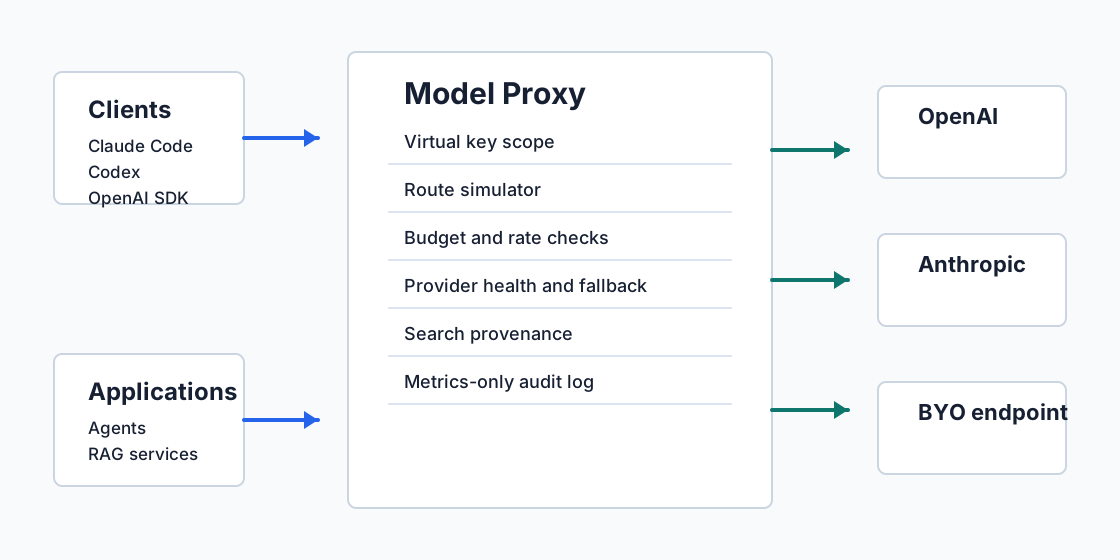
Model Proxy plan comparison mapped to virtual keys, route rules, budget checks, provider health, and upstream models
Free
try the path
Starter
move one project
Pro
review as a team
Enterprise
govern production

Before you pay

Boundary

Pricing does not make a gateway safer by itself. Safety comes from a clear provider profile, a tested alias route, known pricing for the selected model, budget and rate rules, a retention decision, and a rollback path when a provider fails.

The checkout path prepares a deployment request. It does not collect a card, store raw provider keys, or make the public console a production gateway.

Inputs, output, and limits for Model Proxy pricing decisions

Reader questionBest inputUseful outputDo not use it for
Which plan covers our next gateway step? One client type, one requested model alias, one preferred provider, one fallback, and a monthly budget target. A route profile, readiness checklist, retention setting, and plan choice that matches the amount of shared review required. Replacing provider terms, bypassing billing controls, or sending production traffic through an unreviewed public profile.

A realistic Pro use case

Team fit

A product team can use Pro during a migration month: create an OpenAI-compatible route for the app, add a fallback provider, run the simulator against budget policy, check search provenance for agent workflows, then export the route profile for review before production deployment.

The useful result is not a longer feature list. It is a repeatable review loop where the team can see what changed before the client configuration changes.

Model Proxy pricing FAQ

Can I try Model Proxy for free?

Yes. The public console lets you generate a client setup profile, simulate routing, inspect retention defaults, and export local configuration without entering a card.

What changes when a team pays?

The team is paying for shared review capacity and deployment support around route profiles, virtual key scopes, provider checks, audit trails, retention decisions, and production rollout workflow.

Does a paid plan store my provider keys automatically?

No. Production deployments should keep provider keys in encrypted server-side secret storage. The public console only uses a supplied key for the specific provider or search test action.

Which plan should an AI app team choose first?

Use Pro when more than one person needs to review provider choice, fallback, budget, search provenance, or retention. Use Starter when one operator is preparing a single route profile.